 Colorado Springs Premier Water Damage Restoration
Mold Remediation Colorado Springs Colorado
IICRC AMRT certified — IICRC S520 process — clearance testing — free estimate
Call Now — (719) 249-1109Mold remediation in Colorado Springs requires a different level of attention than in most markets. At 6,035 feet elevation, Colorado Springs sits in a region where freeze-thaw cycles trap moisture in wall cavities, hail damage creates invisible roof intrusions, and wildfire aftermath produces flooding events on hydrophobic soil. Our IICRC AMRT-certified mold removal team handles the full range — from small post-leak bathroom mold to whole-attic remediation following hail-damaged roof infiltration. Call (719) 249-1109 for a free assessment.
Do You Have Mold? Warning Signs in Colorado Springs Homes
Mold after water damage in Colorado Springs can establish in less than 24–48 hours. But many mold problems grow slowly, hidden in wall cavities and under flooring, before visible or odor signs appear.
Warning signs to take seriously:
- Musty odor without visible source — The most common early indicator. Mold in wall cavities, attics, and crawl spaces produces a musty smell that’s detectable before visible growth appears.
- Discoloration on drywall or ceilings — Gray, green, or black spots on drywall or ceiling tiles, particularly following a past water event or in areas of known moisture exposure.
- Soft or soft-feeling drywall — Drywall that has absorbed sustained moisture often softens before visible surface mold appears. Pressing gently can reveal saturation.
- Post-water-event history — Any home that had a flooding event, pipe burst, or roof leak — and was not professionally dried to IICRC standards — should be assessed for mold regardless of visible signs.
- Black mold symptoms — Prolonged exposure to mold in indoor environments can cause respiratory irritation, sneezing, eye irritation, and headaches in sensitive individuals. If symptoms appear and coincide with time spent in a specific area of your home, mold behind walls in that area should be considered.
Hidden mold behind walls in Colorado Springs is common after the freeze-thaw cycles that characterize local winters. Water that infiltrates during fall weather can freeze, expand, and push deeper into wall assemblies over winter — creating moisture pockets that aren’t discovered until spring warmth drives mold growth.
Common Types of Mold We Remove in Colorado Springs
Attic Mold from Hail Damage
Colorado Springs is one of the most hail-prone cities in the United States. Large hail events — which the city experiences regularly — create micro-fractures in asphalt shingles and flashings that are invisible to homeowners but admit moisture every time it rains afterward. Water infiltrating an attic slowly saturates insulation and sheathing, creating the warm, dark, humid conditions where mold (typically Aspergillus, Penicillium, or Cladosporium species) proliferates. Attic mold from hail damage is a documented, recurring pattern in the Colorado Springs market. It’s often only discovered during home inspection or insurance inspection after a subsequent damage event.
Crawl Space Mold
Crawl spaces in Colorado Springs homes accumulate ground moisture, particularly in spring and after heavy rain events. Combined with the freeze-thaw cycles that drive moisture through foundation walls, crawl spaces can sustain active mold growth year-round. Cladosporium and Penicillium are common in crawl space environments. Encapsulation and proper ventilation are often recommended following remediation.
Basement Mold
Basement flooding from spring snowmelt, summer flash floods, or burst pipes creates the saturated conditions where mold establishes quickly. Black mold (Stachybotrys chartarum) is more likely in environments with sustained heavy saturation — basements that remained wet for days without professional drying are at elevated risk.
Post-Pipe-Burst Wall Mold
Burst pipes are Colorado Springs’ dominant winter emergency. Walls adjacent to burst pipes absorb water rapidly. If extraction and drying didn’t begin within 48 hours, mold behind walls is likely.
Our Mold Remediation Process
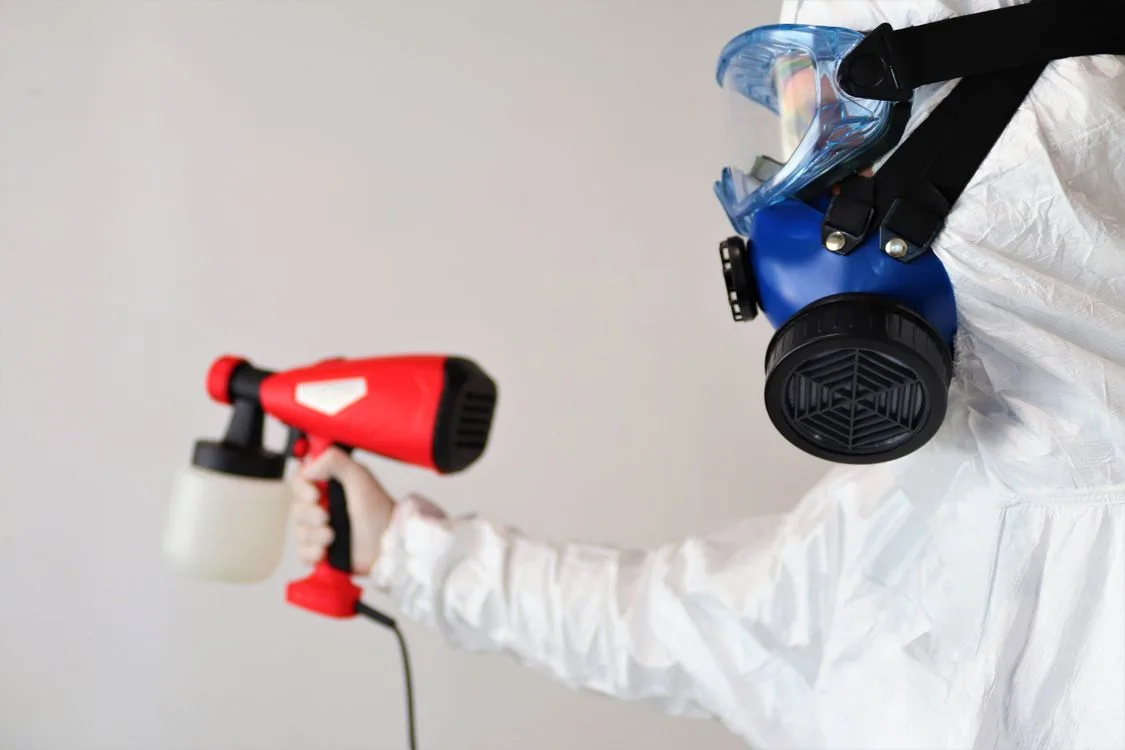
Our mold removal process follows the IICRC S520 standard and EPA mold remediation guidelines:
-
Assessment
Visual inspection, moisture meter readings, and where indicated, air sampling to characterize contamination scope and species. We determine the remediation level (1–4) per IICRC S520 based on affected area.
-
Containment
Polyethylene barrier containment is established around the work area. Negative air pressure is maintained with HEPA air scrubbers to prevent cross-contamination to unaffected areas.
-
HEPA Filtration
HEPA air scrubbers run continuously during remediation, capturing airborne mold spores from the work area air.
-
Physical Removal
Contaminated materials (drywall, insulation, trim, framing if necessary) are physically removed and disposed. Surfaces are HEPA vacuumed and wiped with antimicrobial agents.
-
Antimicrobial Treatment
Remaining structural surfaces receive EPA-approved antimicrobial treatment after physical removal.
-
Clearance Testing
Post-remediation verification confirms that mold levels in the treated area have returned to normal background levels. Clearance testing provides documented evidence that the mold problem has been resolved, not just covered.
Mold remediation often follows water damage that wasn’t fully dried. If the moisture source hasn’t been addressed, remediation alone doesn’t solve the problem — we address both.
Why Colorado Springs Has Elevated Mold Risk
The combination of factors in Colorado Springs creates a mold risk profile unlike typical markets:
- Hail exposure — Annual hail events create ongoing roof infiltration pathways that admit moisture without visible damage signs until mold is established.
- Freeze-thaw cycles at 6,035 feet — Extreme temperature swings drive moisture cycling through building assemblies. Water that enters in fall can freeze and expand in winter, pushing deeper into wall cavities before spring thaw releases it into contact with organic materials.
- Wildfire aftermath flooding — Wildfire burns produce hydrophobic soil conditions — soil that repels water rather than absorbing it. The Black Forest fire (2013) and Waldo Canyon fire (2012) created lasting elevated flood risk in affected areas north and west of the city. Post-fire flooding events deliver moisture into structures in concentrated surge events with minimal warning.
- Older housing stock — Much of Colorado Springs’ housing was built in the 1970s–1990s. Original plumbing, original waterproofing, and aging insulation create cumulative vulnerability to moisture intrusion that manifests as mold in mature markets.
Mold assessment and remediation in Colorado Springs — call for a free estimate.
(719) 249-1109Frequently Asked Questions — Mold Remediation Colorado Springs
-
Mold can begin colonizing within 24–48 hours of water exposure. At 72 hours, active growth in wall cavities, under flooring, and in insulation is likely if moisture levels remain elevated. Acting within the first 24 hours significantly reduces the risk that water damage becomes a mold remediation job.
-
For Category 1 (clean water) events caught quickly, sleeping in unaffected areas is generally safe. If the water event involved sewage (Category 3), if mold is visible or suspected, or if the HVAC system could be circulating mold spores to sleeping areas, temporary relocation is the safer choice. We can advise directly after on-site assessment.
-
Yes. In warm, humid conditions — or in wall cavities and under flooring where moisture and food source (organic building materials) are both present — mold can begin colonizing in as little as 24 hours. This is why emergency water extraction is time-sensitive, not just inconvenient.
-
Musty odor is the most reliable early indicator. Soft or discolored drywall, history of water damage, and unexplained respiratory symptoms are also signals. Thermal imaging and moisture meters can detect active moisture in wall cavities. Air sampling can characterize whether mold spore levels are elevated above normal background. A professional assessment is more reliable than any visual check.
-
Small areas of surface mold (under 10 sq ft) on non-porous surfaces can sometimes be cleaned by a homeowner using EPA-approved biocides and proper PPE. However, mold behind drywall, in attic sheathing, in crawl spaces, or following a water damage event almost always warrants professional remediation. DIY surface cleaning does not address mold inside building assemblies, and incomplete remediation can leave viable spores behind.
-
Professional remediation that includes clearance testing and addresses the moisture source significantly reduces the risk of recurrence. Mold returns when the moisture source is not resolved — if a roof leak isn’t repaired, attic mold will return after remediation. Our process includes identifying and documenting moisture sources as part of the scope so that repairs can be coordinated.
-
Coverage depends on the cause. Mold that resulted from a covered sudden water event (burst pipe, appliance failure) is often covered under the water damage claim. Mold from gradual leaks or flooding may not be. Review your policy and document the connection between the water event and the mold. We provide documentation to support insurance claims.
-
Assessment → containment setup → HEPA air scrubber deployment → physical removal of contaminated materials → antimicrobial treatment → clearance testing. See the detailed process description above.
-
Stachybotrys chartarum (black mold) produces mycotoxins that can cause health effects in sensitive individuals with prolonged exposure. All mold in a living environment should be taken seriously and professionally remediated — the specific species matters less than the fact that indoor mold in building assemblies requires removal, not management.
-
Small remediation projects (Level 1–2 per IICRC S520, under 30 sq ft) can complete in 1–2 days. Larger projects — attic remediation, multi-room contamination, crawl space work — typically take 3–7 days. Clearance testing adds 24–48 hours for results. We’ll provide a project timeline during the initial assessment.